|
| Soft Corals Aplenty |
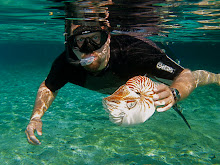
Just returning from snorkeling the northern islands of Raja Ampat. This was the first year of
Oceanic Society's snorkel expedition to this biodiversity hotspot located within Indonesia. Arriving in Sorong our group of 13 was taken to the
Bidadari, a dive (or in this case snorkel) live-aboard
. This vessel would serve as our ocean platform for the next 11 days. Located in the
coral triangle, harboring over 500 coral species and more than 1300 varieties of fish (some just recently discovered),
Raja Ampat has the distinction of being considered the most diverse coral reef ecosystem on the planet.
Each day snorkeling these remote reefs, our group was rewarded with amazing encounters. One day we were treated to a "herd" of Bumphead Parrotfish, A school of over 30 individuals paraded by us, with all members being at least 60+ pounds or more. Their size, confident manner, and shear bulk, made me think this might be the marine equivalent of savanna elephants passing one by on safari.
 |
| Bumphead Parrotfish |
On other days we let the currents take us along multicolored walls covered in tunicates and soft corals. We floated along as if we had fallen down the coral reef "rabbit hole" and much like Alice, never knowing what crazy wonder lay around the next corner. These walls were rich in "macro" marine critters. Tiny animals that Raja Ampat is also know for. Here the sharp eyes of our Indonesian guides Dalton and Caroline, spotted many different types of nudibranchs. Some pictured below. The crypsis continued with scorpionfish, pipefish, and Wobbegon sharks all hidden in plain view.
 |
| Nembrotha chamberlaini |
 |
| Tasselled Wobbegong |
 |
| Halgerda carlsoni |
Getting up each day we never knew what to expect. Each site always had a surprise in store for us and as the trip progressed we all became better at spotting our own "macros" once we took the opportunity to slow down and take a closer look at what nature was putting right in front of our noses (snorkels). Below are a few more photos to share. I will post more about the places we visited, the people that shared these reefs with us, and the coral ecosystem that we were lucky enough to float amongst in the next few days.
 |
| Spinecheek Anemonefish |
 |
| Chromodoris annae |
 |
| Feather Star |
 |
| Risbecia tryoni |
 |
| Snorkeling among the hard corals and Fusiliers |